
Christmas in Barcelona, the local way
Christmas in Barcelona does not arrive all at once. It builds slowly, from the lights going on at the end of November to the Three Kings sailing into the port on 5 January, and most of the best parts happen in kitchens, markets and neighbourhood squares rather than anywhere you would find in a guidebook.
It is also a very Catalan Christmas, with traditions you will not find anywhere else: a log that has to be fed and then beaten, cannelloni the day after Christmas, and the big presents saved for January.
If you are spending the season here, this is how the city celebrates it.
The lights and the Santa Llúcia fair
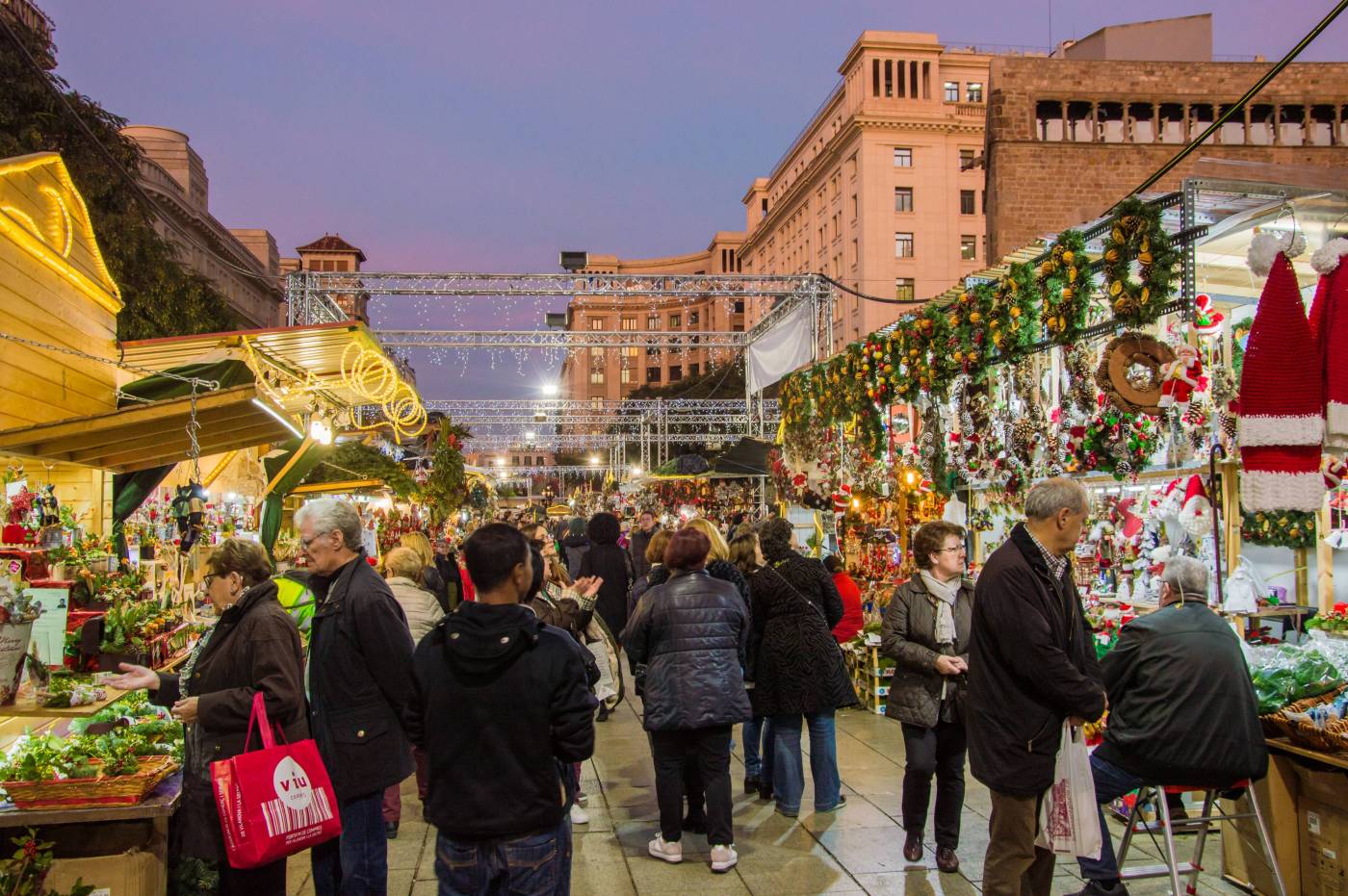
The season officially starts when the Christmas lights go on along Passeig de Gràcia. This year they were switched on on 26 November and stay on every evening until 6 January, across every district, not just the centre. A slow walk under them after dinner is one of the simplest pleasures of a Barcelona December.
Around the same time, the Fira de Santa Llúcia fills the square in front of the cathedral, as it has since 1786. It is the city’s oldest Christmas fair, and it is not really a market for gifts. It is where Catalan families come for moss, cork and tiny figures for their nativity scenes, mistletoe, and a tió for the children. Look out for the caganer among the shepherds and kings: a small figure crouched with his trousers down, hidden somewhere in every Catalan nativity scene. Nobody quite agrees why he is there, but it would not be Christmas without him. The fair runs until 23 December.
Christmas, the Catalan way
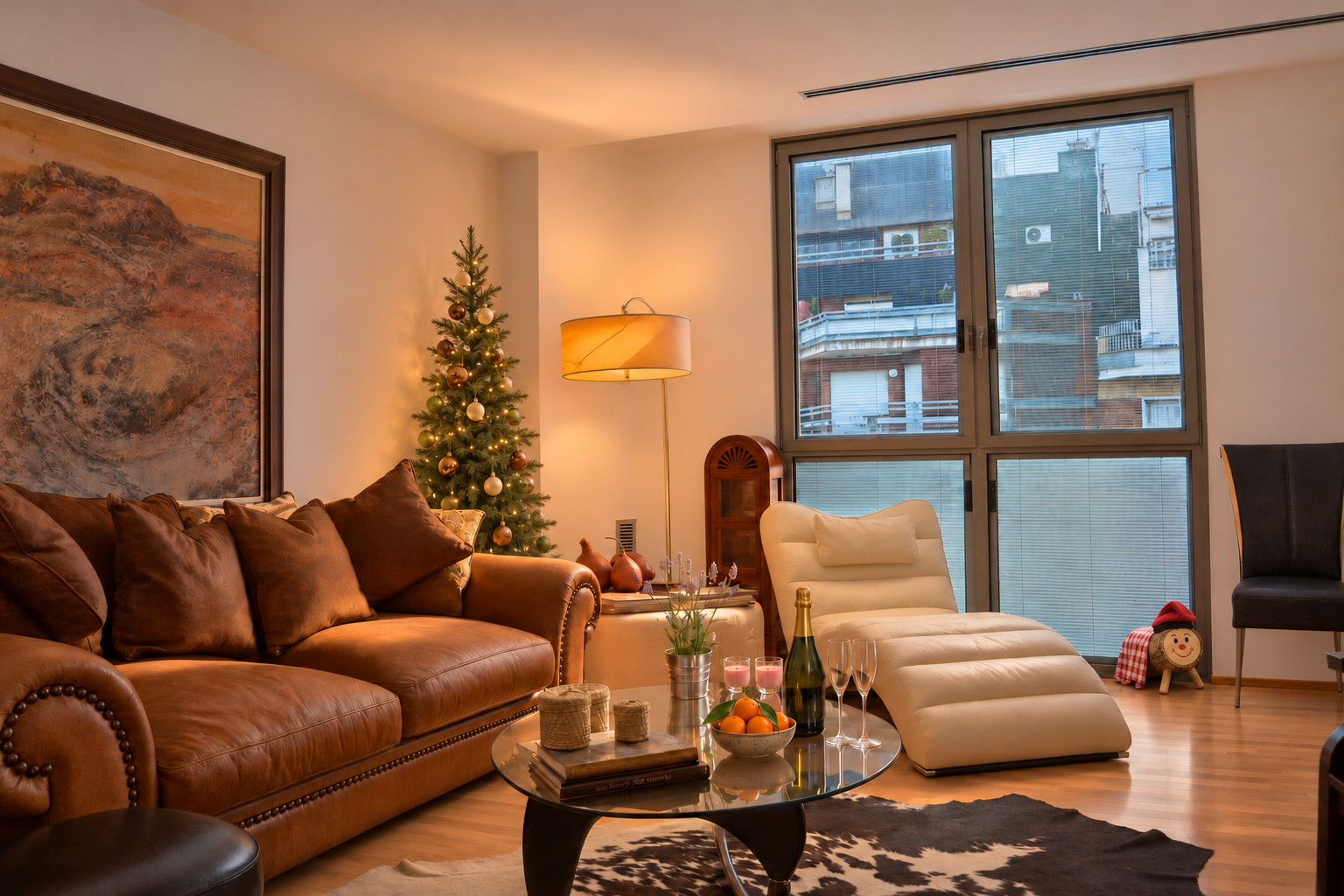
The star of a Catalan Christmas is the tió, a small log with a painted face, a red barretina hat and a blanket to keep him warm. Children feed him every evening through December. Then, on Christmas Eve or Christmas Day, they beat him with sticks while singing a song asking him to poo out presents, and lift the blanket to find sweets and small gifts underneath. It sounds strange written down. In a family living room, it is completely charming.
Christmas lunch on the 25th is long and traditional, built around escudella i carn d’olla, a rich soup with large pasta shells followed by the meat and vegetables that cooked in it, and finished with torró and cava.
Then comes the day most visitors miss. In Catalonia, 26 December, Sant Esteve, is a second public holiday and a second family lunch, and the dish is canelons: cannelloni made with the meat left over from the day before. Almost every family has its own recipe, and many restaurants serve them on the day.
New Year: twelve grapes and a cold swim
New Year’s Eve follows the Spanish tradition. At midnight, everyone eats twelve grapes, one on each chime of the clock, for twelve months of good luck. It is harder than it sounds, there is always someone choking with laughter by the eighth, and the grapes are washed down with cava. Supermarkets even sell them peeled and seeded in little tins for the occasion.
New Year’s Day is quiet. The city sleeps late, most shops are closed, and the only real activity is on the beach, where the brave go for the first swim of the year in water that is cold but bearable. Watching from the promenade with a coffee is also allowed.
The Three Kings
For Catalan children, this is the real Christmas. On 5 January, the Three Kings arrive in Barcelona by sea, landing at the Portal de la Pau at the bottom of the Rambla. In 2027 they are due at 16:30, and their parade sets off through the city at 18:00, with floats, music and a great deal of sweets thrown into the crowd. Go early, pick a spot along the route, and bring a bag for the sweets.
That night, children leave out their shoes and something for the camels, and on the morning of 6 January the presents appear. The day is a public holiday, and it ends with a tortell de Reis, a ring-shaped pastry hiding two surprises: a small king figure, which makes you king for the day, and a dried bean, which means you pay for next year’s cake.
A few practical notes
The season has four public holidays: 25 December, 26 December, 1 January and 6 January. On those days most shops and many restaurants close, and public transport runs a reduced service, so stock up the day before. Christmas Eve and New Year’s Eve are normal days until the afternoon, then the city goes home.
If you want a restaurant for Christmas Day, Sant Esteve or New Year’s Eve, book early. Many places serve set menus only, and the good ones fill up weeks ahead.
The winter sales start straight after the Three Kings, if you are still here on 7 January.
Spending the season here
Most of what makes Christmas in Barcelona special happens at home. The cava, the canelons, the grapes at midnight, the tió by the sofa. It is hard to take part from a hotel room, and much easier from an apartment with a proper kitchen and a table big enough for everyone.
If you spend the holidays with us, we can take care of the details. We can have the fridge stocked before you land, book the restaurant for Sant Esteve, arrange a private chef for Christmas Eve, or set up the apartment for New Year’s Eve, so all you have to do is find the grapes.
Bon Nadal, and see you in Barcelona.